

Fashion Retail 2.0: How AI is Reshaping the Entire Clothing Creation Process
November 9, 2025

The fashion industry is entering a period of rapid transformation. Artificial Intelligence is becoming a standard part of how companies operate. For every player in the market, from raw material suppliers to top online fashion retailers, understanding this shift is essential for staying competitive and driving growth.
In this article, we examine how AI assists businesses in forecasting demand, identifying current fashion trends, optimizing their assortment, and maintaining a strong market position.
Challenges Facing the European Apparel Market
The European fashion retail industry is undergoing a major digital shift and rising sustainability pressures. According to Eurostat, in 2024, 46% of EU consumers bought clothing or footwear online, making e-commerce a core sales channel and customer-behavior data one of the most valuable assets in the fashion supply chain. Platforms like ServiCom help businesses test products before launch, gather early feedback, and refine their assortment.
At the same time, rapid changes in consumer preferences create serious retail challenges in forecasting, planning, and managing product ranges.
1. Overproduction
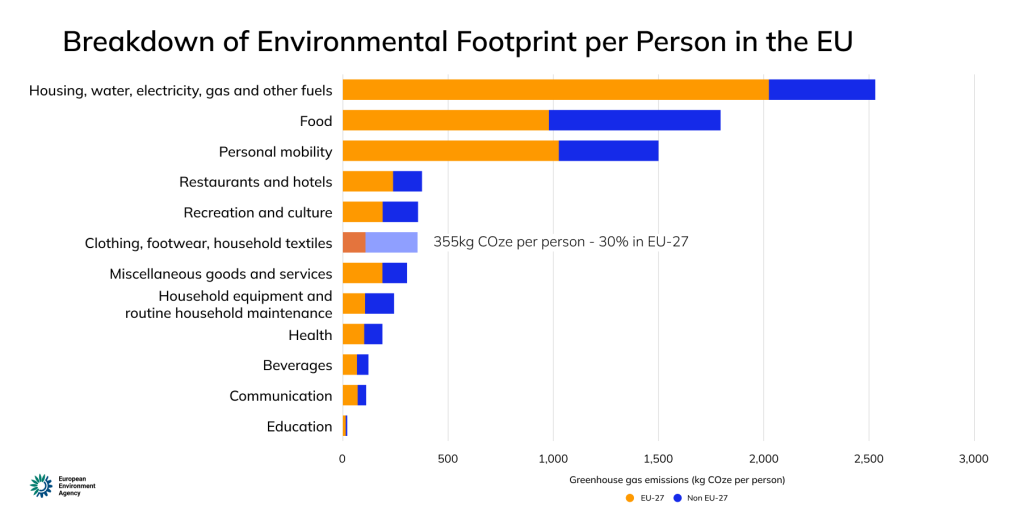
The traditional model, built on long-term forecasting, results in 10% to 40% of clothing produced each year remaining unsold. Retail market research from the European Environment Agency shows that in 2022, clothing, footwear, and accessories in the EU accounted for 523 kg of raw materials per person, or 3.2% of all resources.
2. Product returns
In physical stores, about 8% of items are returned, while in online sales, this number reaches nearly 30%.

The main reason buyers send products back is a mismatch in fit or size.
3. Counterfeits and new sustainability standards
Producers of fake goods take part in the market while avoiding investment in quality or environmental responsibility. At the same time, companies face new sustainability requirements that demand transparency in materials, production, environmental impact, and labor conditions.
Updated EU rules on eco-claims and waste control raise operational costs and push brands to rethink their supply chains, intensifying existing fashion industry supply chain issues.
How AI Helps Reduce Product Returns
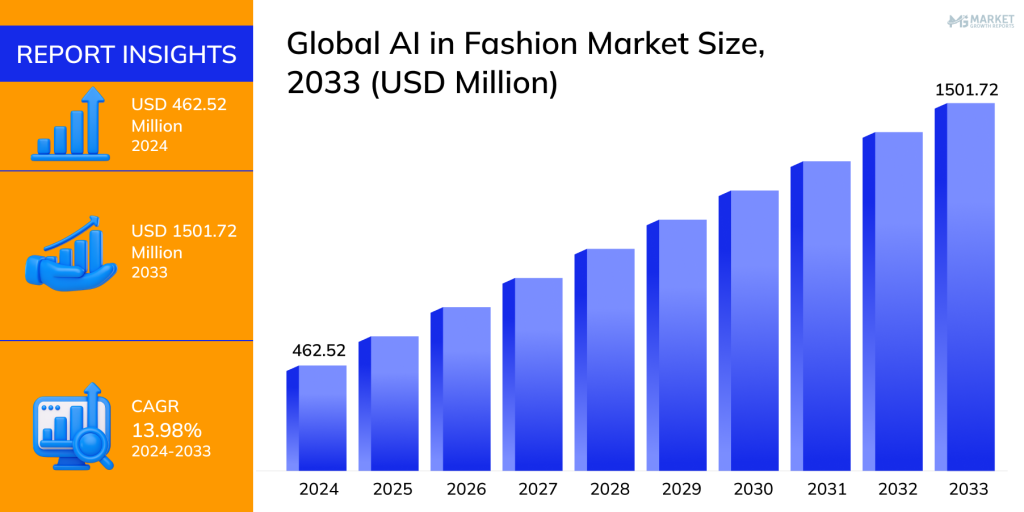
The global artificial intelligence in apparel market is projected to reach $1501.72 billion by 2033 with a CAGR of 13.98%. This rapid growth opens new opportunities in fashion forecast, enabling retailers to predict purchasing patterns, identify tendencies, and plan their assortment with far higher accuracy.
To understand how AI lowers refund rates, let’s look at the key areas where it is used.
- AI-driven analysis of sales and customer behavior. According to Gitnux, fashion forecasting systems powered by artificial intelligence help decrease overstock by 20–30%. Machine-learning models process large volumes of data, taking into account clicks, purchases, and past order history. This allows companies to predict which products will appeal to specific customer segments. As a result, businesses produce the models and sizes that will actually be truly needed, lowering the risk of returns caused by unmet expectations.
- Monitoring future fashion trends across social platforms. Artificial intelligence analyzes Instagram, TikTok, Pinterest, and other channels to detect emerging styles before they go mainstream. This helps retailers release trending items in the right quantities, curbing the likelihood of unsold items caused by unpopular designs.
- Predictive analytics for seasonal collections and size ranges. AI systems identify which colors and sizes will dominate upcoming seasons and estimate how many units of each product to produce. Customers receive items that align with their preferences, which significantly decreases returns due to sizing or appearance issues.
As a result, unsuccessful purchases become less frequent, customers tend to keep their items, and both financial performance and brand loyalty grow.
How AI Reduces Overproduction and Supports Sustainability in Clothing Manufacturing
AI is transforming production strategies in modern fashion retailing. With predictive analytics, companies can create only what the market truly needs, cut waste, and lower their environmental impact. Here is how this works in practice.
Test & React and Made-to-Order Models Help Minimize Overproduction
Artificial intelligence makes small-batch and made-to-order manufacturing economically feasible and supports a more sustainable the future of fashion. This approach aligns with current apparel industry trends, where product teams aim to cut excess stock and improve demand accuracy. Below are real examples of companies already applying Test & React and Made-to-Order models.
- ASOS cut its inventory by almost 50%. The company tests small batches in the market and places additional orders only after customer interest is confirmed. This method has become one of the key e-commerce fashion trends, as brands seek to respond faster to real customer demand.
- Balodana uses AI to produce garments based on each customer’s exact measurements, which significantly lowers waste.
For manufacturers, Test & React and Made-to-Order models mean fewer unsold items, stronger sustainability, and a focus on quality rather than volume.
GenAI Minimizes Time and Resources in the Design Process
Generative AI speeds up the creation of new models and visual concepts. Designers can turn sketches or written descriptions into detailed 3D models, generate hundreds of design variations, develop color palettes, and quickly adapt to online fashion retail trends without producing physical prototypes.
3D Visualization and Virtual Fitting Rooms Lower Returns and Waste
According to Grand View Research, the global virtual fitting room market was valued at $5.57 billion in 2024 and is expected to reach $20.65 billion by 2030 (CAGR ~24.6%).
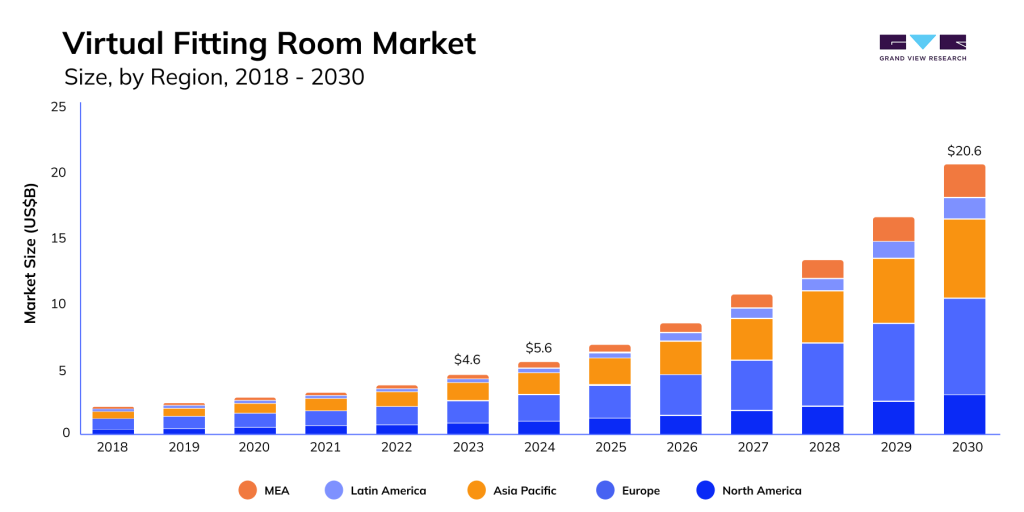
This growth makes artificial intelligence and 3D technology in the fashion industry widely accessible, enabling businesses to create digital clothing prototypes and virtual try-on experiences. Shoppers can see how an item will look on them before purchasing, which significantly cuts return rates.
Research shows that virtual fitting rooms can increase conversion by up to 30% while cutting storage and disposal costs. This approach has already become part of leading fashion industry trends, with more brands adopting solutions that improve size accuracy and elevate the buying experience.
How AI Transforms Suppliers and Clothing Manufacturers
AI is reshaping the entire fashion industry supply chain. Its impact can be grouped into three key areas.
- Flexibility and faster production cycles. Vendors now work with smaller batches, shorter cycles, and must respond quickly to shifts in customer needs — a defining part of today’s retail industry trends. Analytical AI systems share real-time demand insights with manufacturers, helping them plan production with greater precision, reduce excess stock, and apply the principles behind “what is fashion forecasting” in daily operations.
- Quality control and fewer returns. Computer-vision AI systems automatically detect fabric flaws, stitching issues, or structural defects. According to WifiTalents, about 47% of manufacturers already use artificial intelligence for quality inspection. More accurate customer needs, and better assortment planning also reduce return rates, lowering logistics costs and minimizing environmental impact.
- Shared analytical systems between brands and suppliers. AI makes it possible for brands to exchange data and forecasts in real time, including insights into the latest fashion trends, creating a transparent supply chain. This close B2B collaboration helps prevent the bull whip effect, where minor demand fluctuations cause major swings in supplier orders.
AI brings more agility, accuracy, and transparency to logistics, curbs waste and costs, improves product quality, and strengthens collaboration across the entire supply chain in a rapidly changing market.
Conclusions and Recommendations for Businesses
Generative AI can significantly improve profitability in the clothing field. According to fashion market research by McKinsey, it can add $150–275 billion in operating profit to the apparel sectors over the next five years. For fashion retailers, manufacturers, and suppliers, adopting new technologies is becoming essential, as a strategic approach to artificial intelligence helps companies navigate ongoing fashion industry supply chain issues.
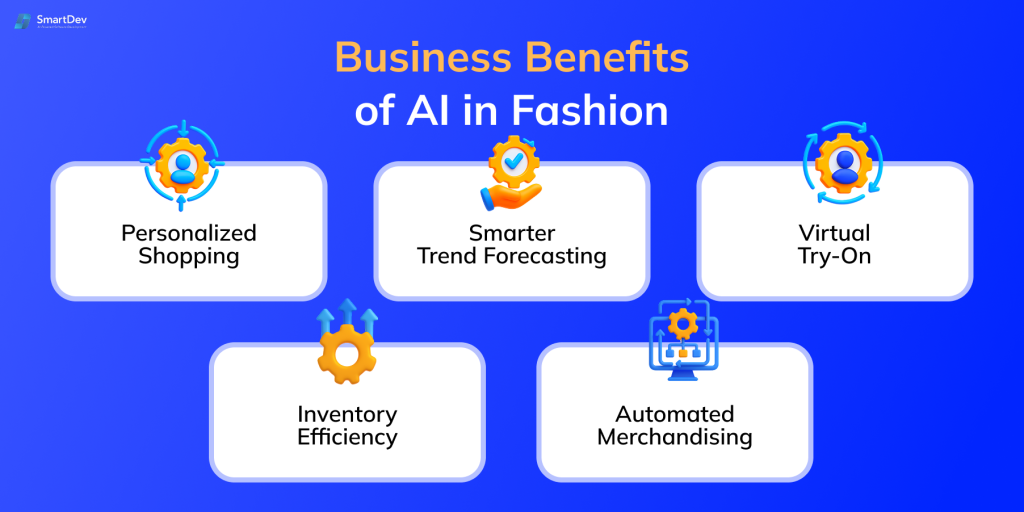
- Start with small AI projects. For example, introduce predictive analytics for selected SKUs or implement virtual fitting rooms. What matters is not only purchasing an AI solution, but integrating it into existing workflows so that fashion technology truly supports decision-making and helps businesses react faster to demand changes.
- Invest in analytics and team training. Investment should cover more than forecasting platforms, social-media monitoring tools, or customer-data systems. Teams across design, marketing, and inventory planning need to understand how AI works to interact effectively with these tools. A gradual rollout through pilot projects helps mitigate risks.
- Collaborate with partners and suppliers. Real-time data sharing and joint forecasting create a transparent supply chain. In line with current clothing industry trends, shared analytical platforms and partnerships with tech companies or AI-focused apparel startups allow brands to access ready-made solutions and accelerate business transformation.
- Use AI responsibly and support sustainability goals. When introducing AI, consider data protection, algorithm transparency, and responsible use. Beyond profitability, artificial intelligence should also help manage overproduction, cut waste, and support more sustainable business models.
Strategic adoption of AI, thoughtful investment, and strong partnerships help brands remain competitive, optimize operations, improve profitability, and build a more sustainable and transparent apparel sector.